WHAT IS AN ICON?
The word “icon” from the Greek “εἰκών” simply means image. The first chapter of Genesis describes God making man in the image of God. Man becomes the first icon, and God is the first iconographer, or icon-maker.
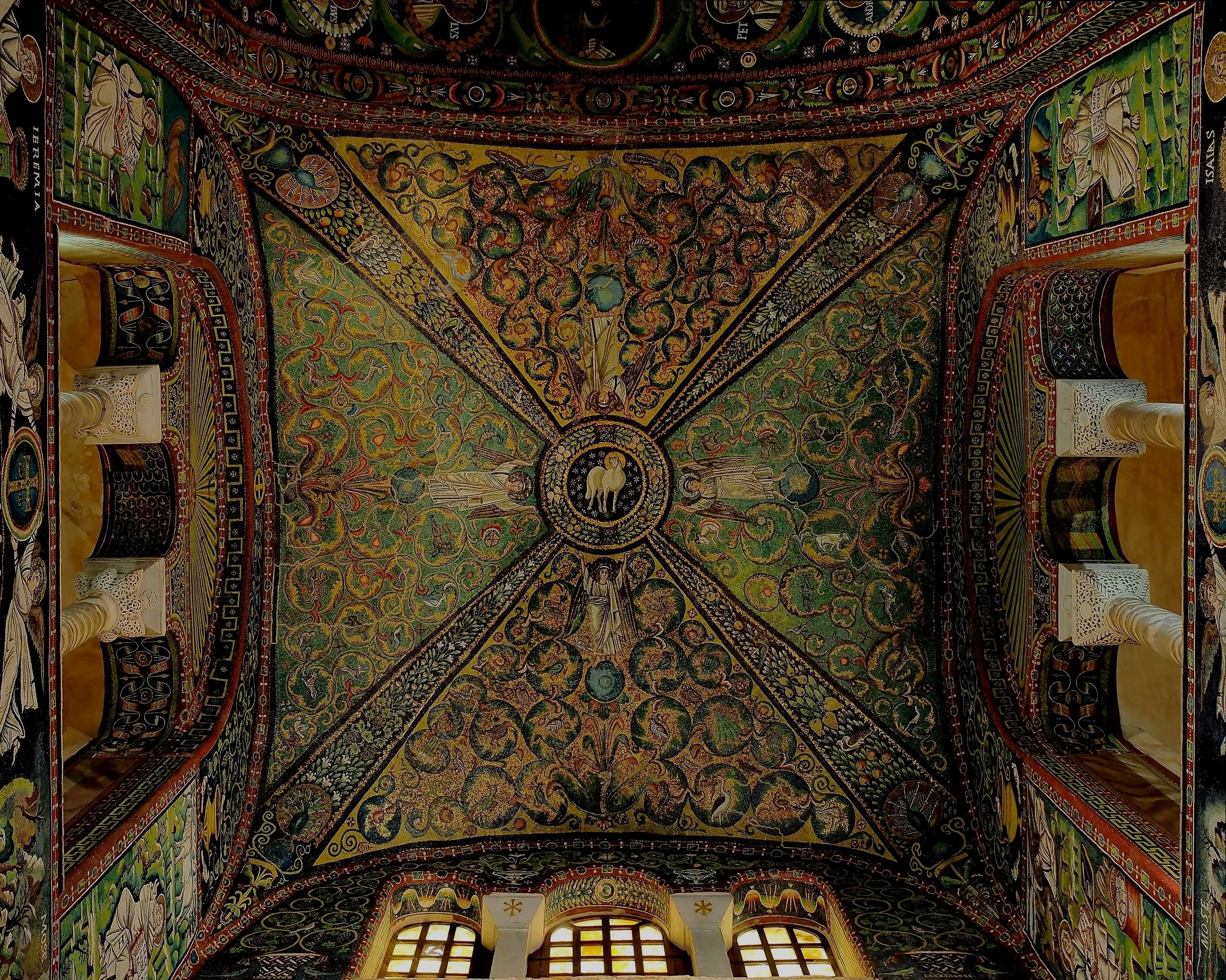
The icon plays an important role in Christian liturgy in life. It declares that God became man, and that we can now see Him and strive to participate in the life of God. The icon has a rich history and theology, and thus continues to be a relevant expression that has continuously been explored for the entirety of Christian history. These images can be crafted through a variety of forms, be they painting (murals, egg tempera, encaustic), mosaics, stained-glass windows, carving, etc. This article explores how individuals today read Christian art, even if it was created hundreds of years ago.
To explore how Orthodox artists are exploring Christian art and iconography today, check out the Orthodox Arts Journal.
ABOUT THE ARTIST
Makary is a Canadian-Egyptian painter residing and working from Ottawa, Canada. He studied Fine Arts at OCAD University (BFA) and Art History (MA) at the University of Toronto. He was trained to paint icons under Seham Guirguis, an assistant professor to the late Dr Isaac Fanous. Makary has since produced hundreds of commissioned icons and works for churches, chapels, monasteries, publications, exhibitions and individuals who commission him internationally. Through his work aims to enable relationship, encounter, and love, all in the context of sacred space and liturgy.
THE CONTEMPORARY COPTIC SCHOOL
In the 1950s, the late Dr Isaac Fanous was tasked by Pope Kyrillos the sixth (followed by Pope Shenouda III) to revive, reform, and standardize the iconography of the Coptic Church. He was appointed chair of the art department of the Higher Institute of Coptic Studies (HICS) in 1960, and in 1965 he received a scholarship from the Louvre to study restoration and iconography in Paris, largely under the renowned Leonid Ouspensky and Paul Evdokimov (who he would spend 2 years with). Upon his return to Cairo, Fanous launched a series of iconographic programs in Alexandria and Cairo. Thus the art of the icon, through the use of the canons and visual methods re-established by Fanous, was revived among the Copts. Between 1960 and 2002, Fanous would proceed to paint thousands of icons for over 40 churches in Egypt, England, Canada, the US, and France, training several disciples who continue to work until this day. Today many of his disciples continue to work, and Fanous’ paramount efforts have continued to inspire younger generations of iconographers to strive to in the liturgical tradition he revived while also encountering the burgeoning demand of the diaspora’s thirst for Tradition.

A clip from a Leo Rampen’s 1976 CBC documentary Son Rise in which the atelier of Fanous at the Higher Institute of Coptic studies is briefly documented.